The email greeting and salutation is the first line your recipient reads, setting the tone for the rest of your message.
How do you select the right one? What’s appropriate, and what are the risks of going too creative?
In this post, you’ll learn what to consider when selecting an email greeting and salutation, why you should go beyond mentioning the user’s first name, and see real email examples from SaaS brands.
Don’t wait for the muse. Apply this step-by-step method to write high-performing email campaigns in hours, not weeks.
How to select the appropriate email greeting and salutation
Consider these few things when deciding how to open your email.
Brand voice
The brand voice dictates the words and language you use to speak with your audience, so it’s definitely a factor in selecting the right greeting line.
Let’s look at examples from Quickbooks and Duolingo.
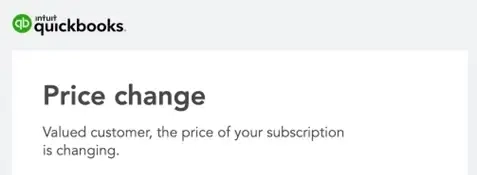
Quickbooks addresses the customer as a “valued customer” in the email salutation because their tool is used in professional and corporate settings.
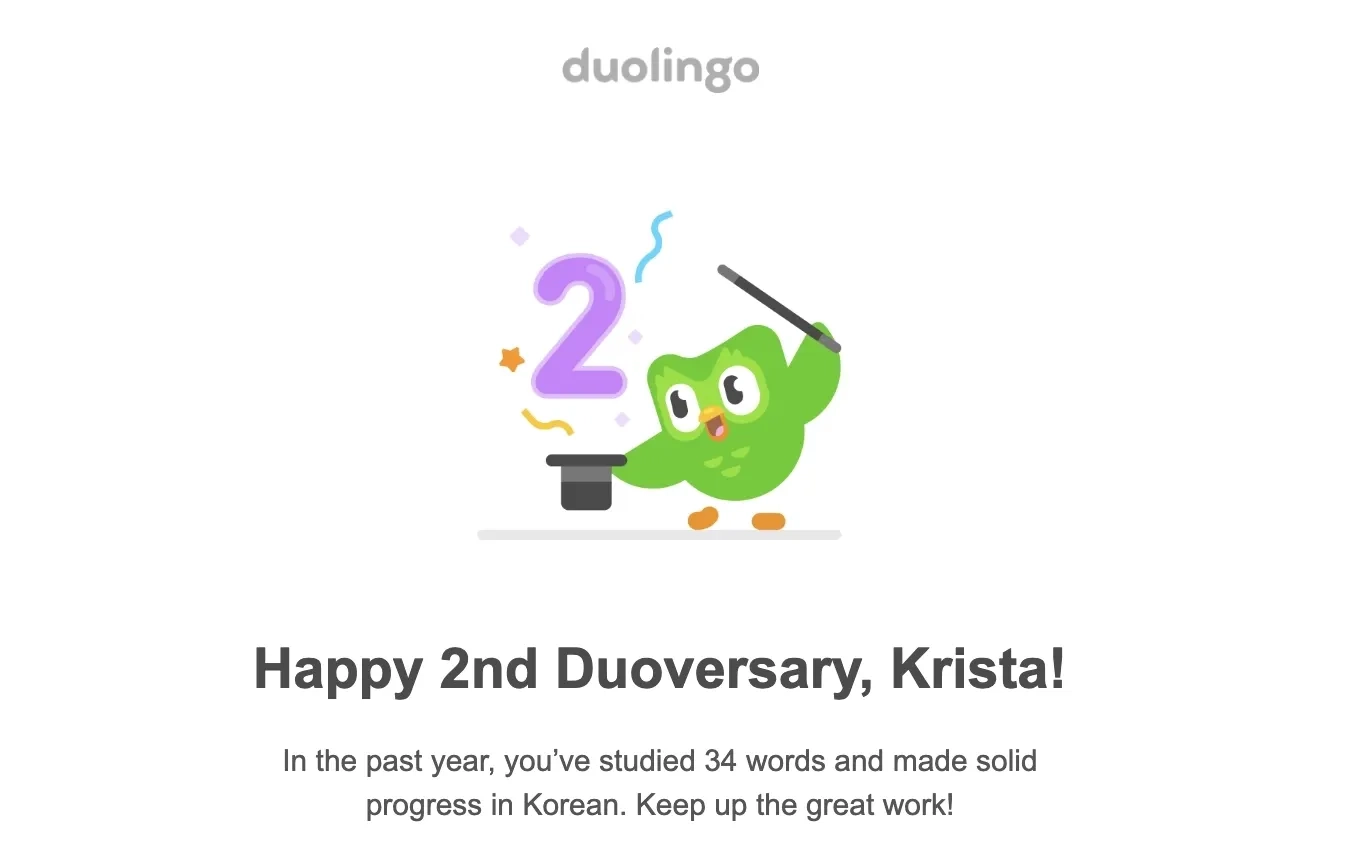
In contrast, Duolingo is known for its fun branding so they’re using more playful language used in their emails.
Email type and topic
The email type and topic also dictates the appropriate greeting for your emails.
A brand may talk casually to their audience by default, but might shift the tone when a serious topic is involved.
Let’s look at these two examples from Polywork:
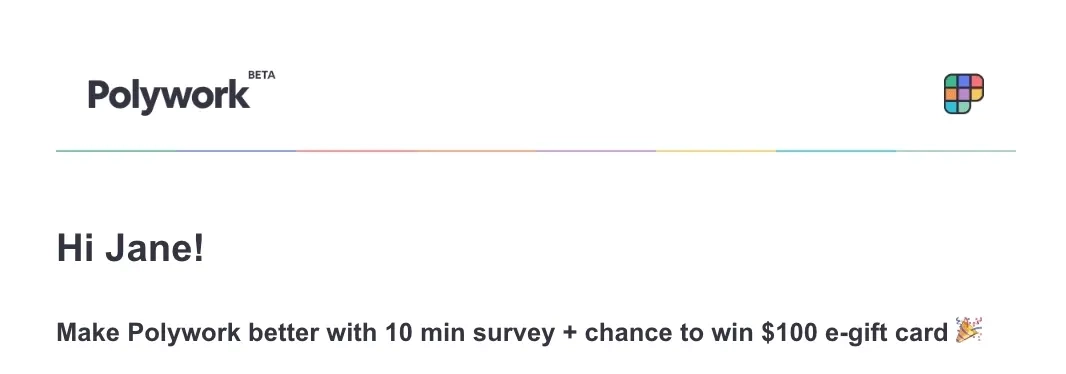
In this email, Polywork uses a friendly greeting, leaning into that established customer relationship to ask for feedback.
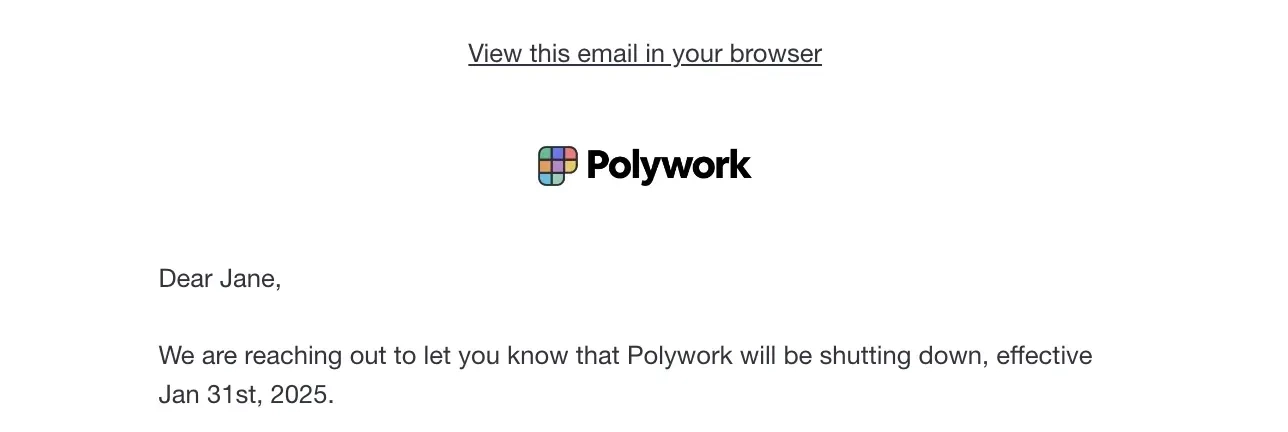
But they switched to “Dear [first name]” when telling the user that the product will be sunset:
The email recipient
Are you sending the email to customers only, or a general newsletter audience?
While each may require different treatment, you typically have more information about your customers compared to a newsletter subscriber.
For example, newsletters go out to both customers and email list subscribers (and recipients know it’s a mass broadcast).
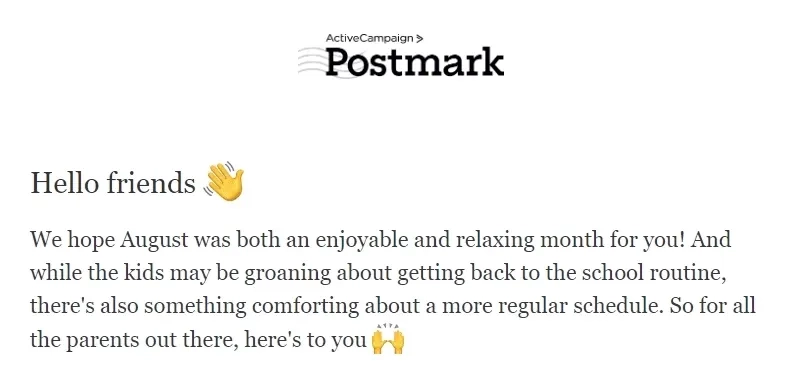
Some brands include the first name while others like Postmark go with a casual, generic salutation:
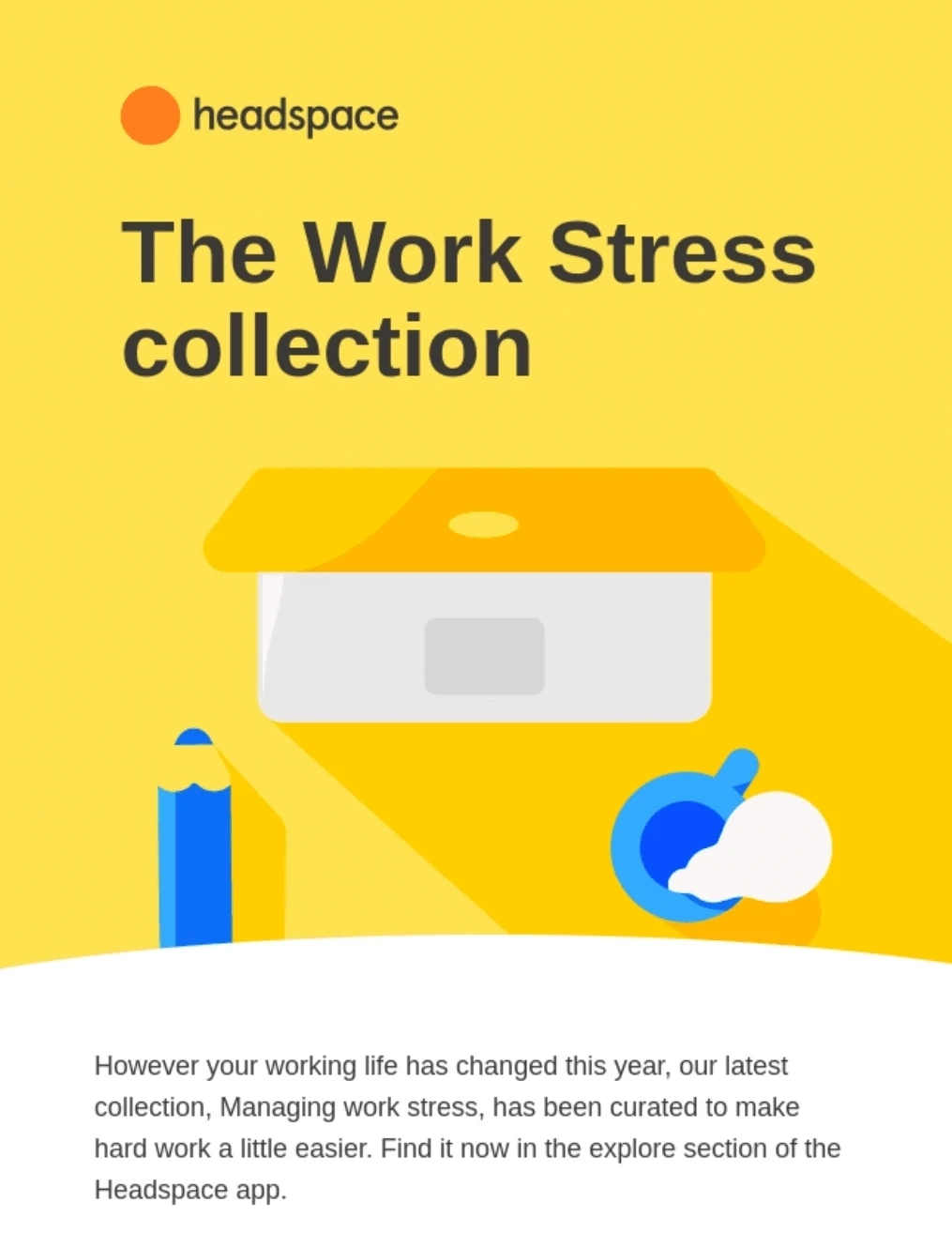
But for a big brand like Headspace, they skip the greeting and salutation altogether.
Source: Really Good Emails
Can you skip on the email greeting?
While there’s no hard and fast rule, the option to skip the email greeting depends on factors such as:
- How established your brand is
- What type of email you’re sending
Big brands like Anthropic can skip the first name and/or greeting to get straight to the point.
Smaller brands, who are still building customer relationships, can skip email greetings only on certain email types, where a mass send is expected — such as newsletters and product updates.
Should you include the first name in your email greetings?
According to a B2B SaaS email strategist Wangari Peris, including the first name gives your emails a personal touch even if the recipient knows it’s an automated email:
“I find first names work best in lifecycle emails, especially welcome emails, milestone celebrations, and upgrade emails. ‘Congrats on sending your first proposal, Mary!’ hits harder than ‘Congrats on sending your first proposal.’
Personalization is much more than first names, but they signal ‘this email was meant for you’ in a way that plain copy can’t.”
But she emphasized that only use the first name when the data is available and clean:
“I always check what name data is actually available before recommending it. First names work best when the data is clean. Nothing breaks the illusion faster than ‘Hey s3@wtf’ or pulling through an awkward username someone typed at signup instead of their real name.”
Meanwhile, email marketer Aerin Paulo says using first names is a double edged sword so it depends on the brand’s relationship with their customers:
“I think this one can go both ways – some folks might think the fact that a SaaS company knows their name is creepy, and others might think nothing of it or be pleased by it.
In the end, it depends on the company and their relationship with their customers, and that info should be used to make a call.”
For Devin O’Toole, Head of Email creator and Bitly’s senior lifecycle marketing manager, name personalization is a trap:
“Name personalization is a trap! The reason is not because it can cause errors—proper testing and having a fallback value are easy solutions to this.
The real reason is too many brands just stop at first name and think, ‘There, it’s personalized. Job done.’ It becomes noise. In fact, almost all of the cold sales outreach I get has my first name in it—so there’s a very real possibility someone might trust your email LESS because you used their name.”
He emphasized that brands should go beyond just dropping the user’s name and reach deeper:
“On its own, the only time I’ve seen a real impact from including the first name is when brands get real creative with it. In fact, I think there’s more impact in strategically using your own name than there is in dropping in a user’s name.
That’s not to say it’s completely worthless. It’s just that your audience demands more from you than a name drop. You need to reach deeper, find ways to use it that add value, that surprise and delight.”
Read more about how to go beyond dropping the user’s first name in this post: Personalized Email for SaaS.
Common email salutations and greetings in SaaS email marketing
Let’s look at the common greetings and salutations used by real SaaS brands in their emails.
Hello/Hey/Hi
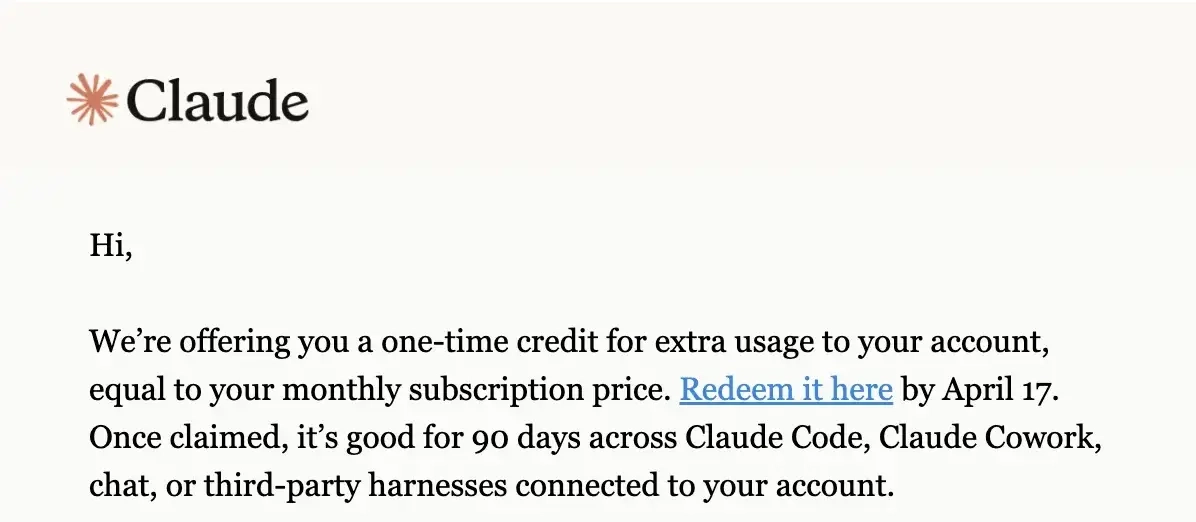
Anthropic chose a short greeting to open their promo email for extra usage credits.
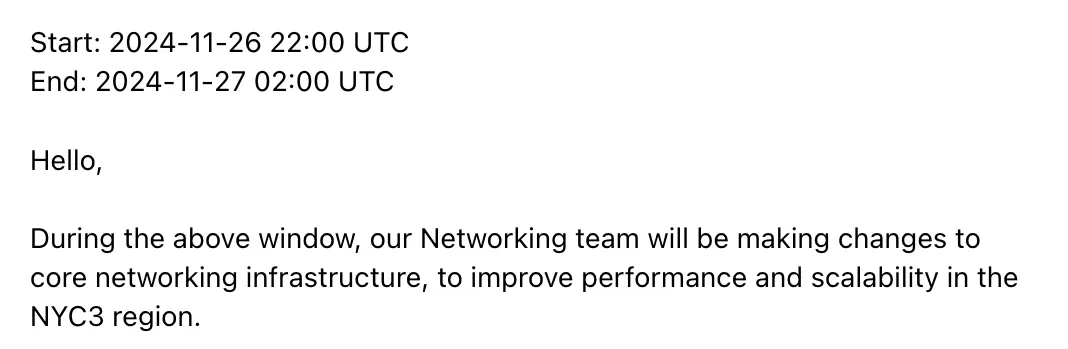
DigitalOcean opened their scheduled maintenance email with a simple “hello”.
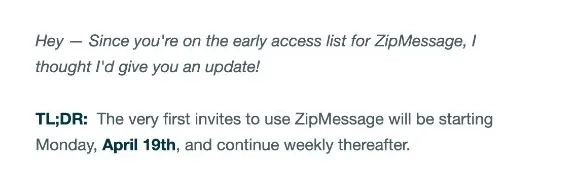
The founder of ZipMessage (now Clarityflow) greeted waitlisted users with a friendly “Hey” on this product launch email.
Hello/Hey/Hi there
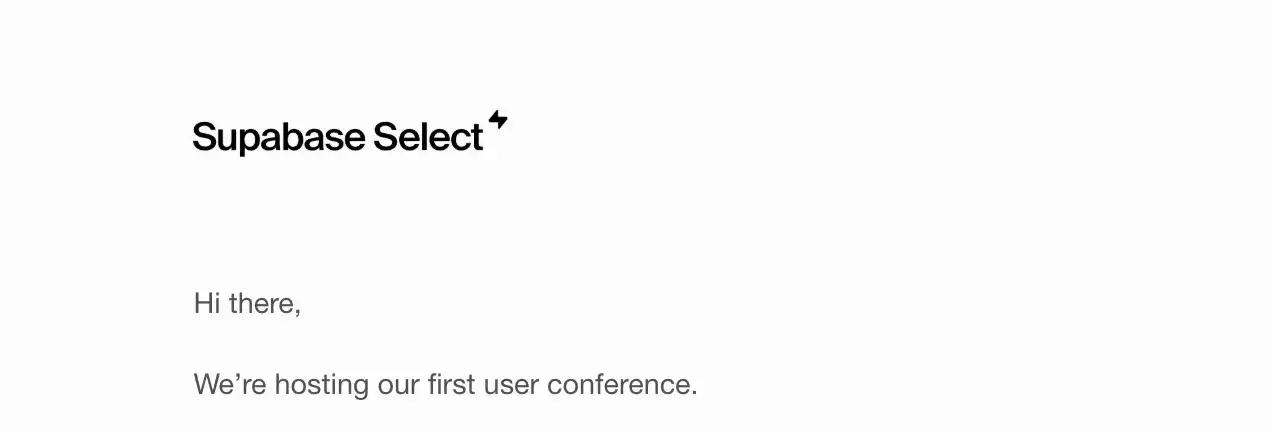
Supabase went with a “Hi there,” to open their conference invitation email.
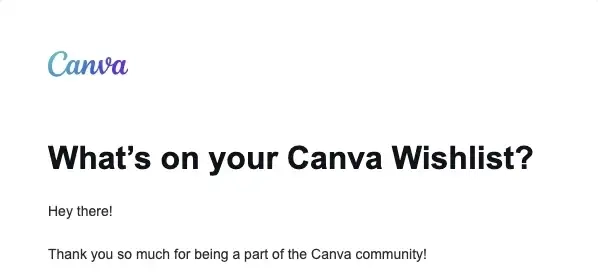
Canva chose “Hey there!” for this email to lean into that established customer relationship when asking for feedback.
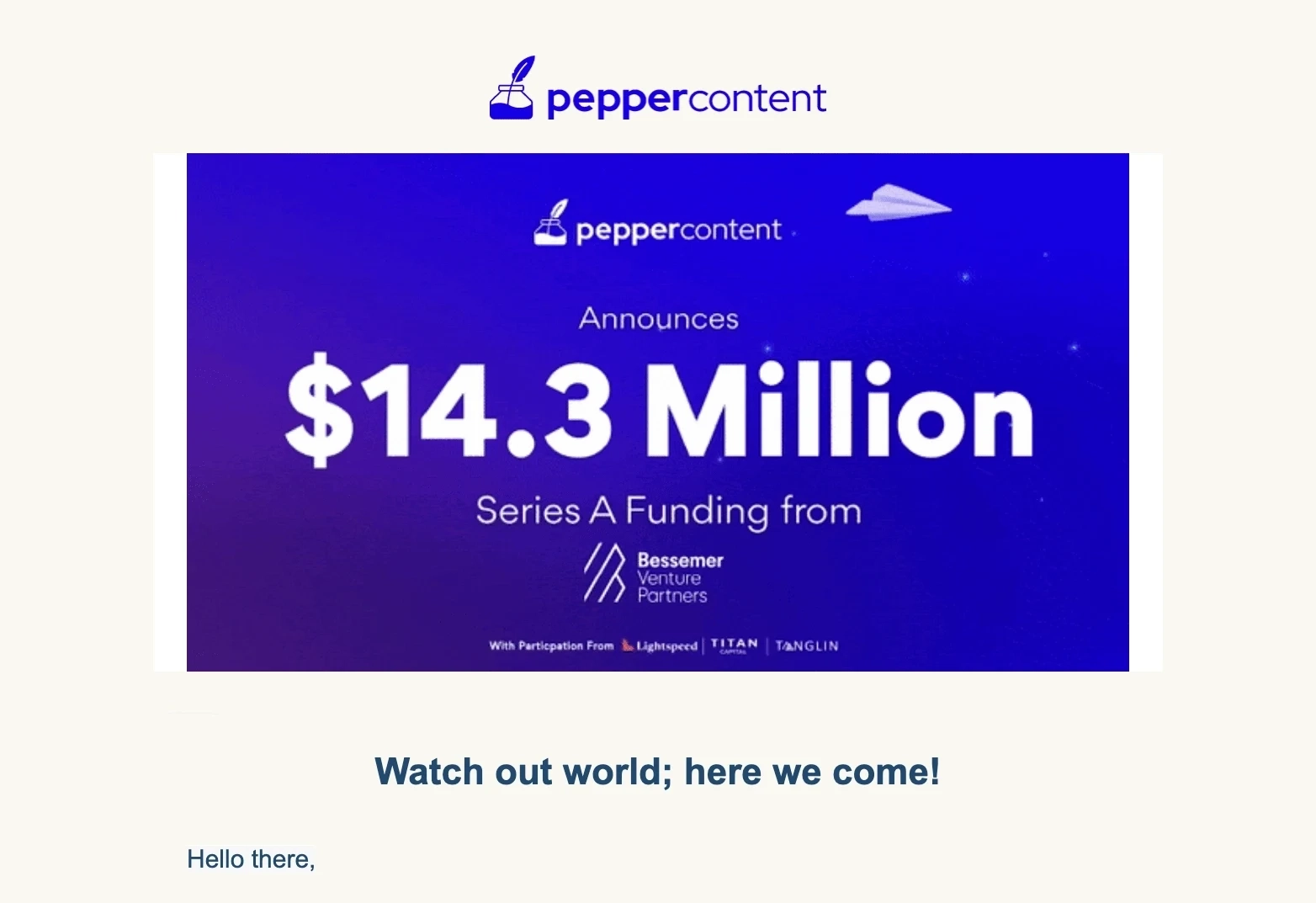
Pepper opened their funding round announcement email with a “Hello there,” greeting to their subscriber list.
Hello/Hey/Hi [first name]
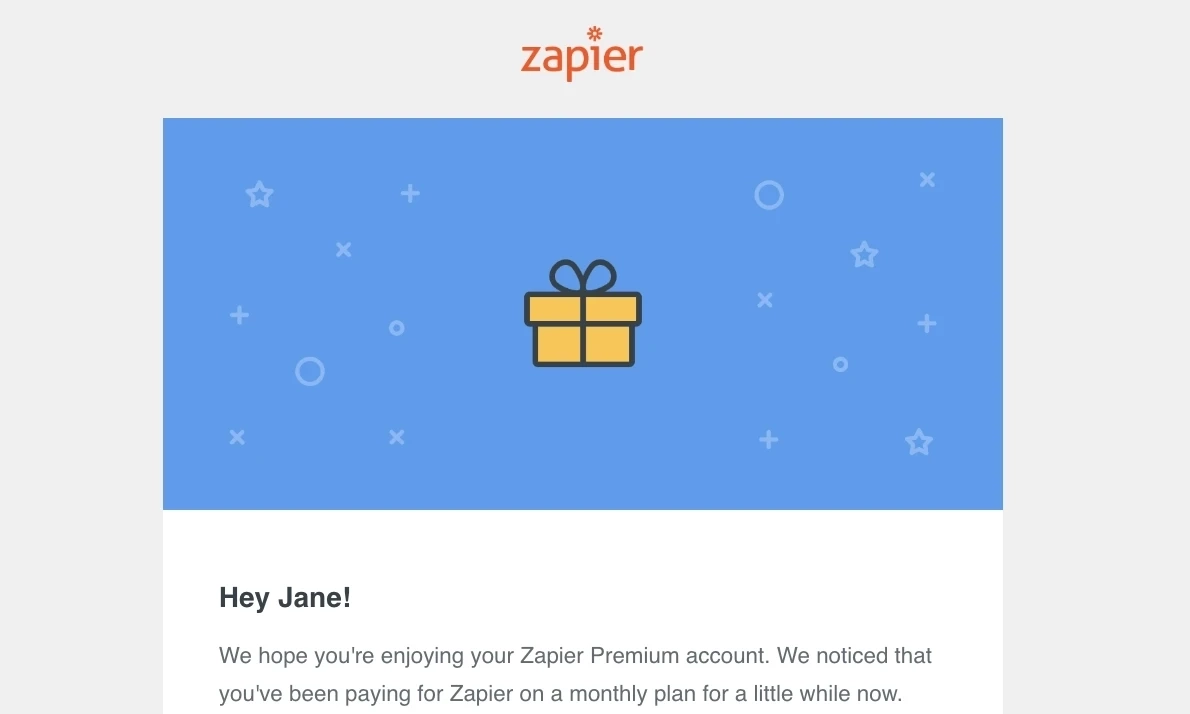
Zapier greets the user with a friendly “Hey [first name]” in this switch to annual billing email.
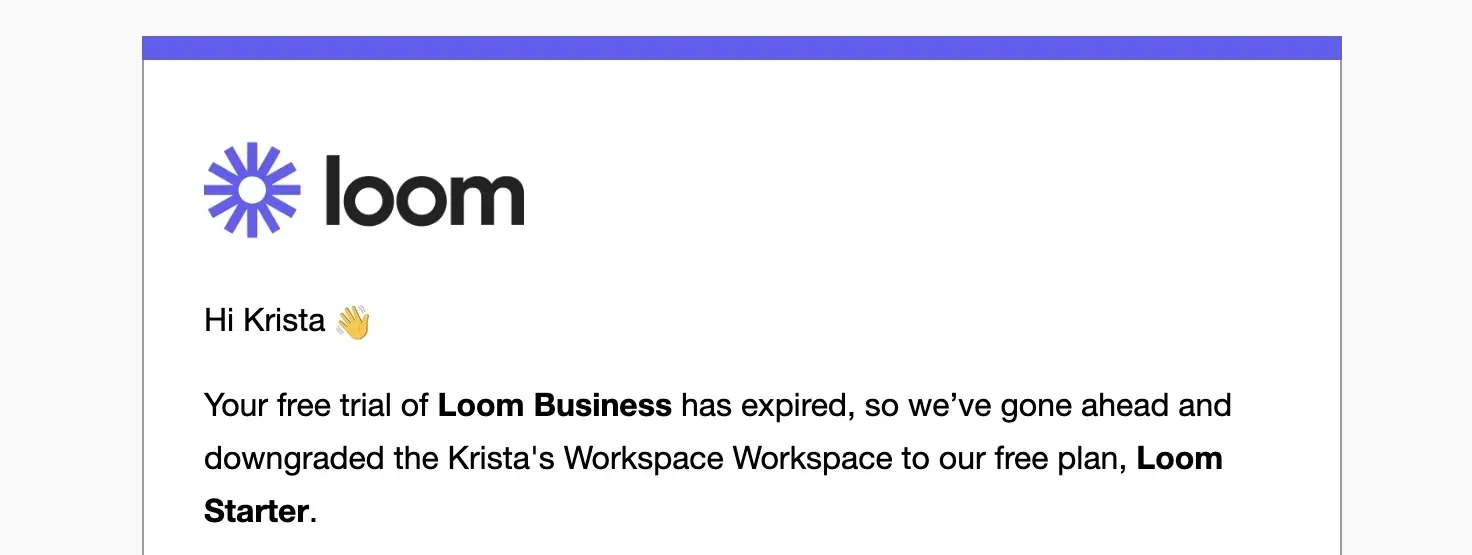
Loom says “Hi [first name] 👋” to open this trial expiration email.
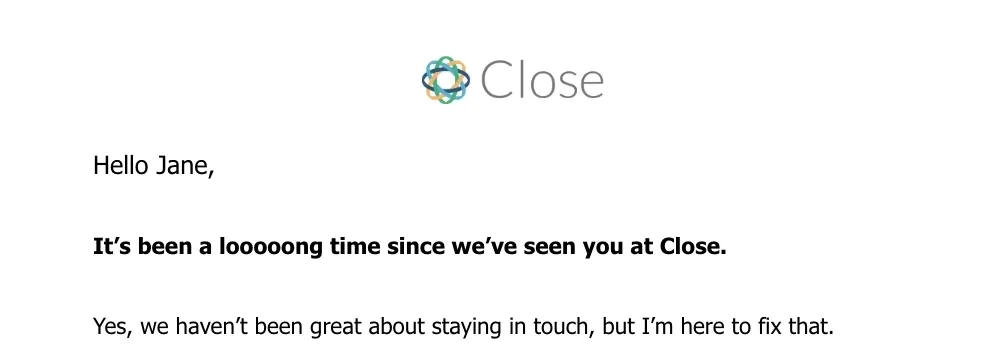
Close starts with a “Hello [first name]” in this re-engagement email.
Hello/Hey/Hi [full name]
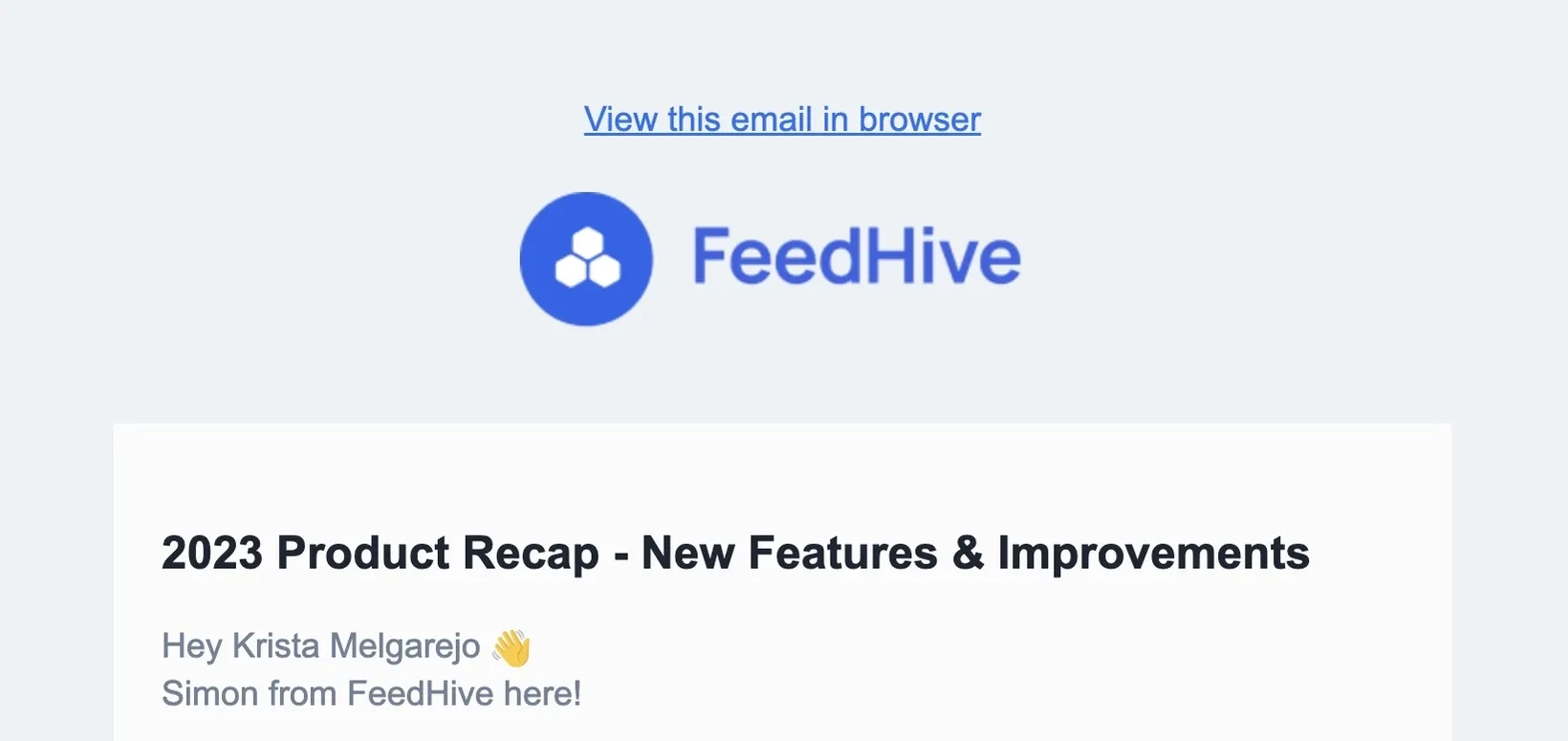
FeedHive greets their users with a casual “Hey [full name]” in this year-in-review email recapping the new features and improvements they shipped in 2023.
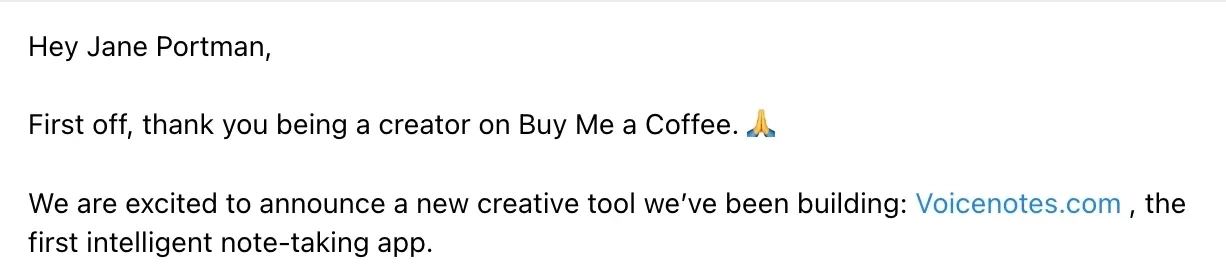
Buy Me a Coffee went with a similar approach in this product launch email for Voicenotes.
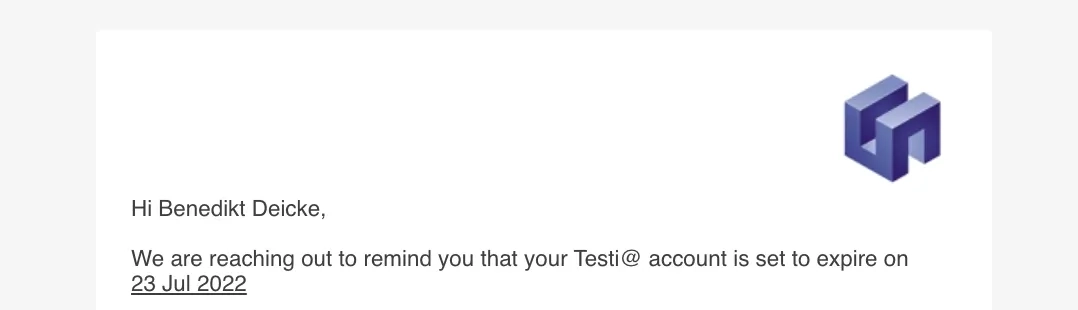
Testi@’s renewal email greets the user with their full name.
Hello/Hey/Hi [account name]
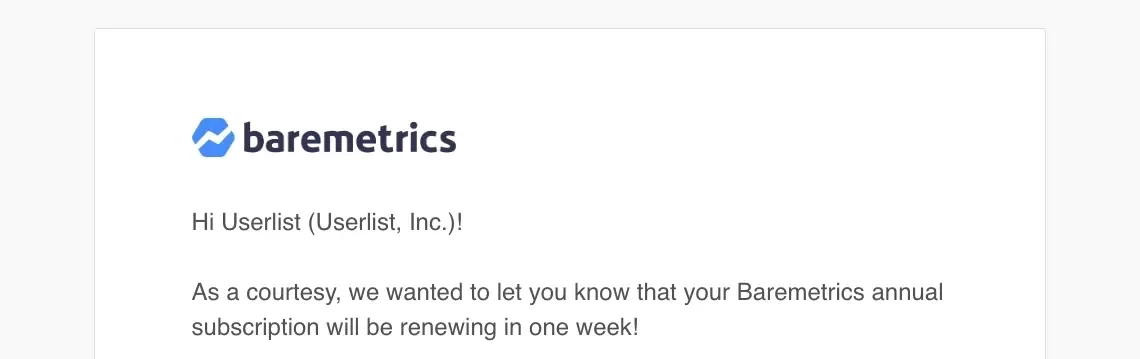
Instead of a first name or full name, Baremetrics addresses users with their account/organization name in this renewal email.
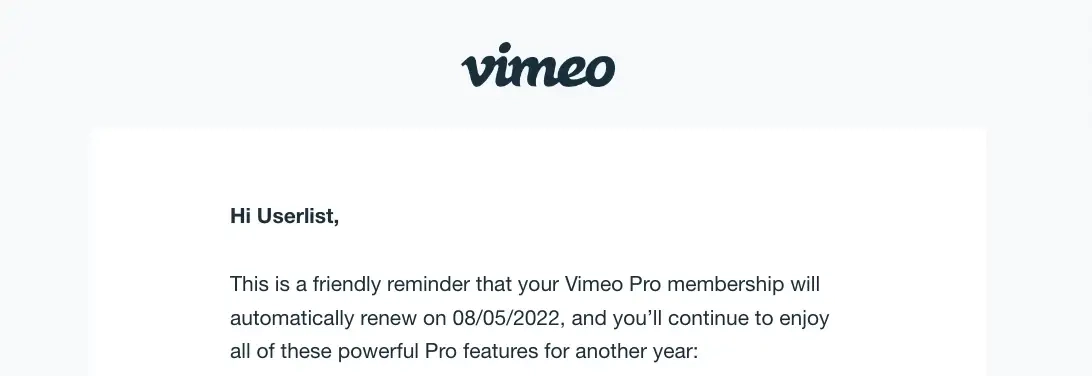
Vimeo went with a similar approach, addressing the user with their account name in their renewal email.
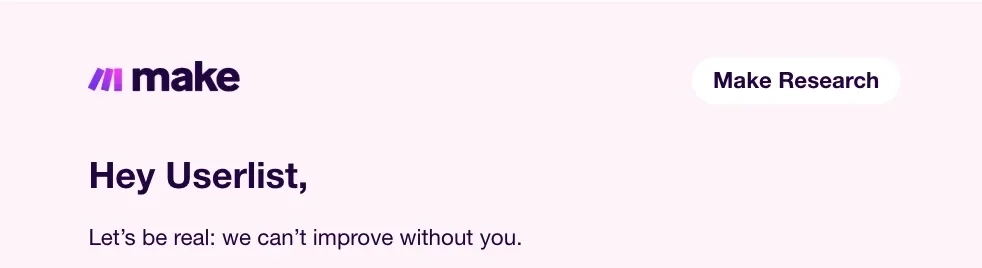
To solicit insights for their survey, Make used the friendly “Hey [account name]” greeting for this email.
Hello/Hey/Hi [user role]
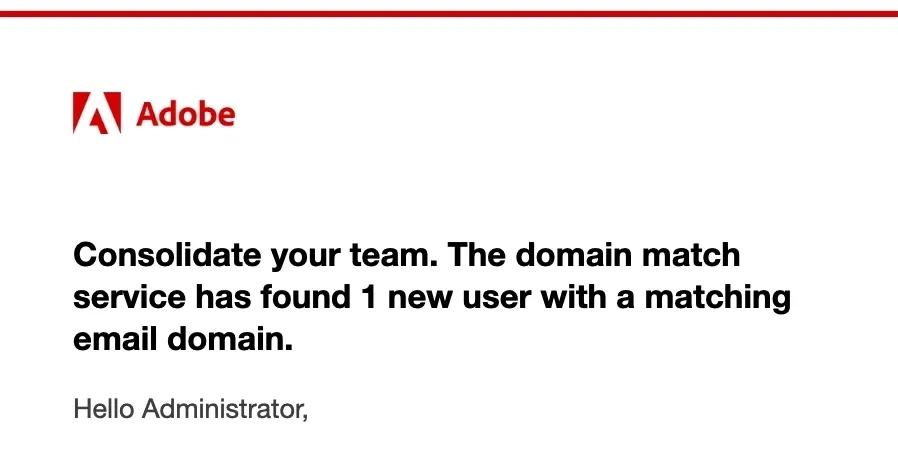
Thanks to Thomas of OptinMonster for this example.
Adobe greets the user with “Hello [user role]” because this invite your team email is specifically sent to administrators only.
Hello/Hey/Hi [tool] user

Tolgee addresses their user as “dear Tolgee user” in this feedback email to let them know they are valued.
Hello/Hey/Hi [tool community name]
Some brands give their user community a unique brand tribe name to build customer loyalty.

Surfer addresses their user community as Surfers, to leverage that customer relationship for their survey email.
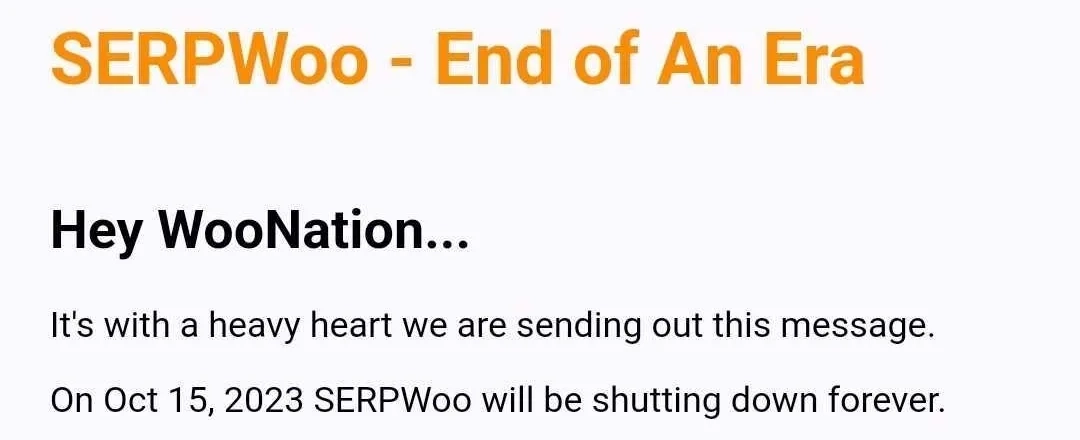
SERPWoo refers to their user community as WooNation, going with a friendly approach to deliver the unfortunate news of the product being sunset.
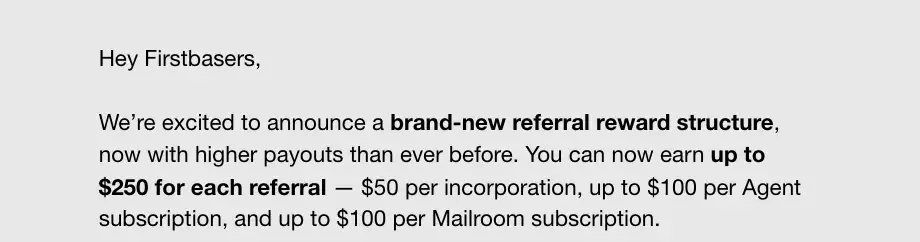
Firstbase greets their users with a friendly “Hey Firstbasers” in their referral email.
Hello/Hey/Hi [casual generic term]
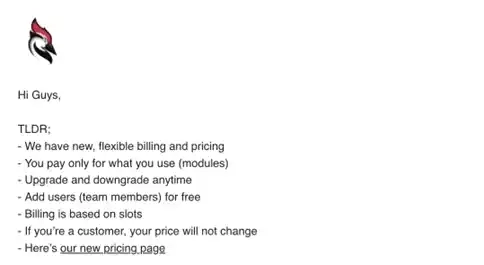
Woodpecker went with a casual “Hi Guys” greeting for this pricing update email.
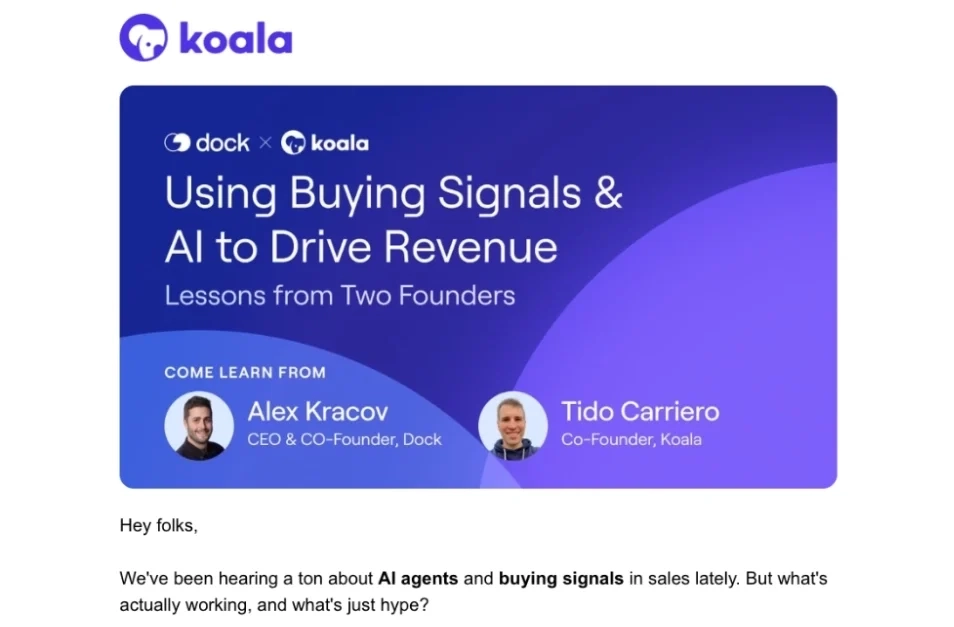
Koala refers to their list subscribers as “folks” in this webinar invitation email.
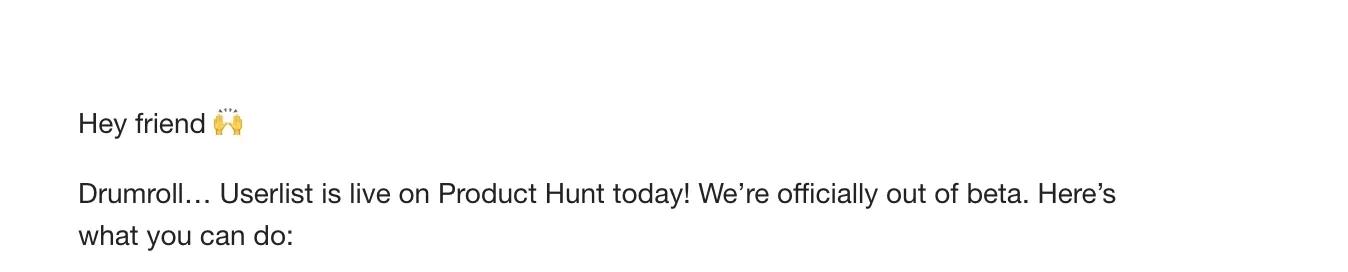
In our old emails, we referred to a list subscriber as “friend”.
Postmark went with a similar approach, referring to their newsletter list as “friends”.
Dear [first name]
Source: Really Good Emails
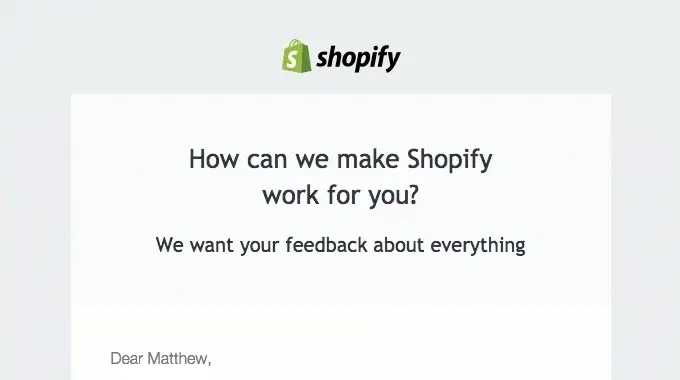
Shopify opened their feedback email with “Dear [first name]”.
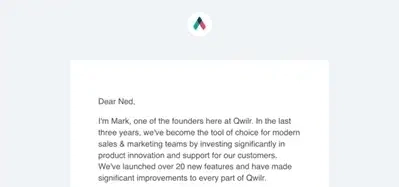
Thanks to Ned Dwyer of Great Question for contributing this example.
Qwilr went with a similar approach in their pricing update email.
Polywork swaps their usual friendly “Hi [first name]” for a more serious “Dear [first name]” when they announced that the platform will be shutting down for good.
Dear [full name]

EngageBay went with the professional “Dear [full name]” in this promo email for their exclusive lifetime deal.
Dear [user role]
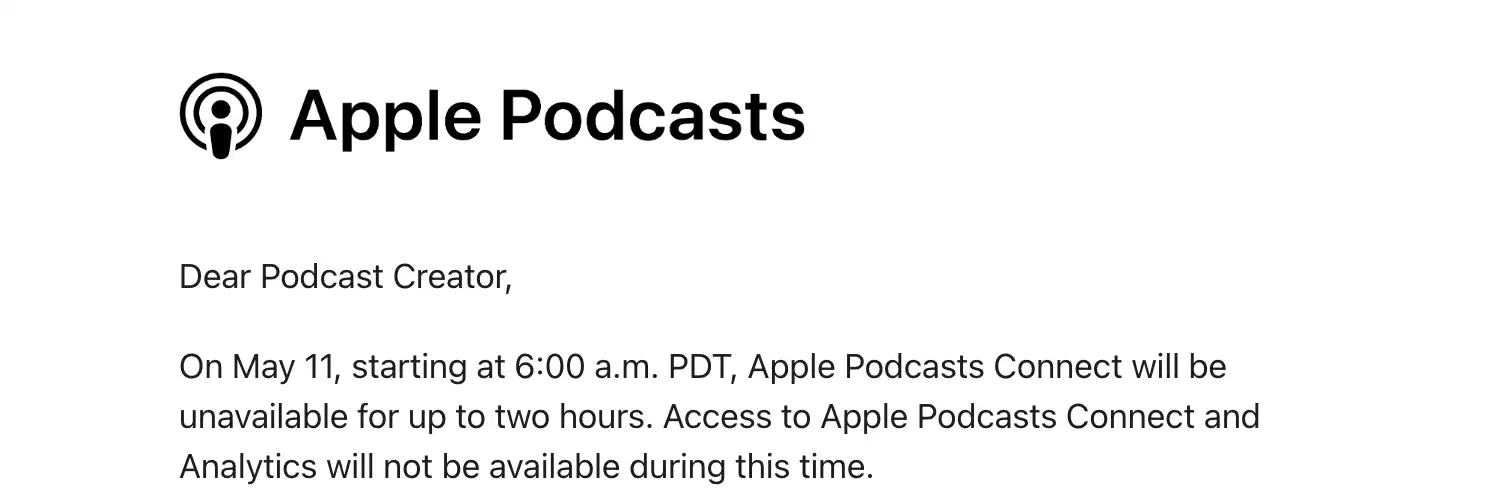
Apple Podcasts for Creators refers to the user as “Podcast Creator” in this scheduled maintenance email.
Dear [tool] user
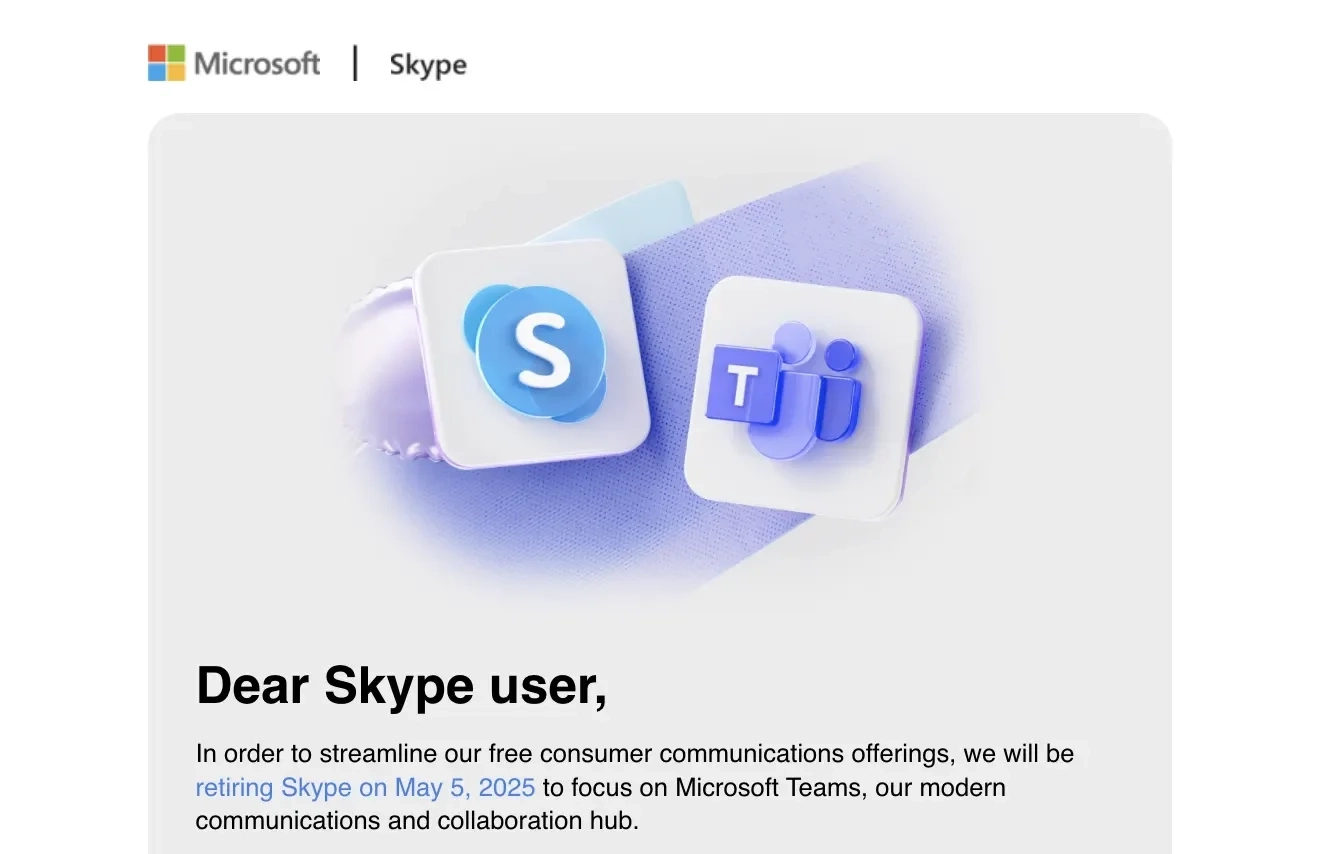
Microsoft referred to users as “Skype user” in this email to announce that they’ll be retiring Skype to focus on Teams.
Dear [professional generic term]
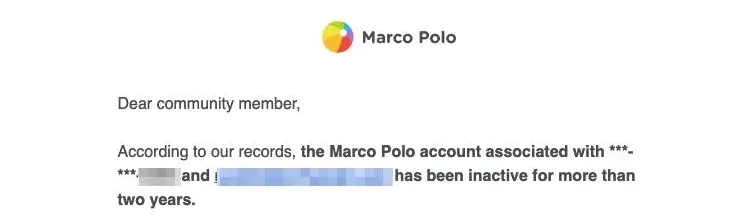
Marco Polo went with the generic “community member” to refer to the user in this account removal email.
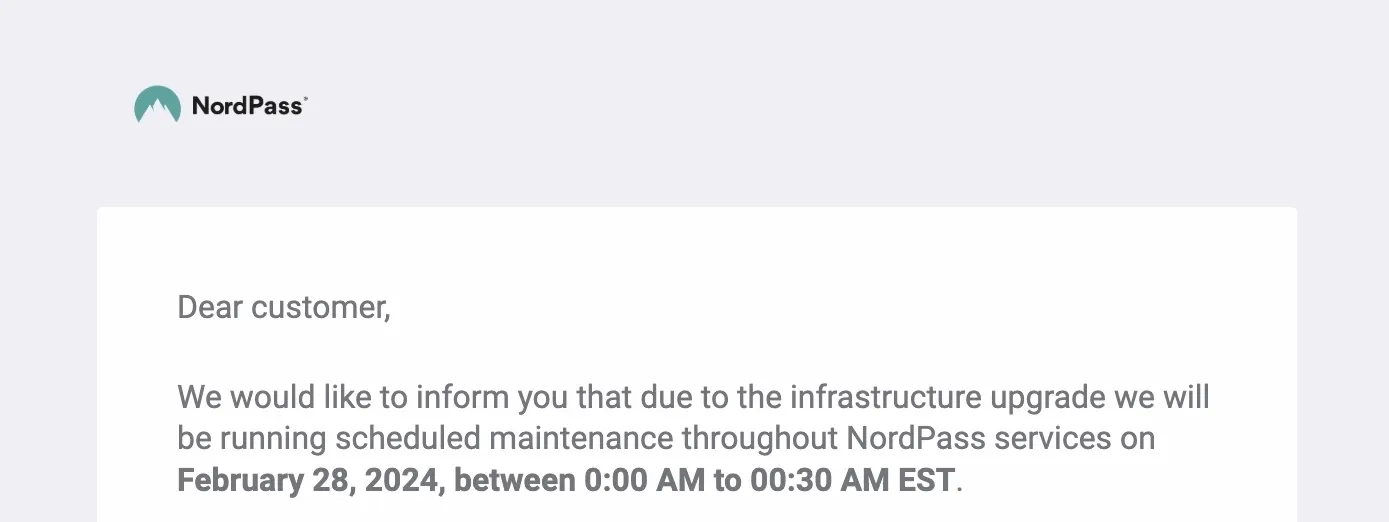
NordPass refers to their users as “customer” in this scheduled maintenance email.
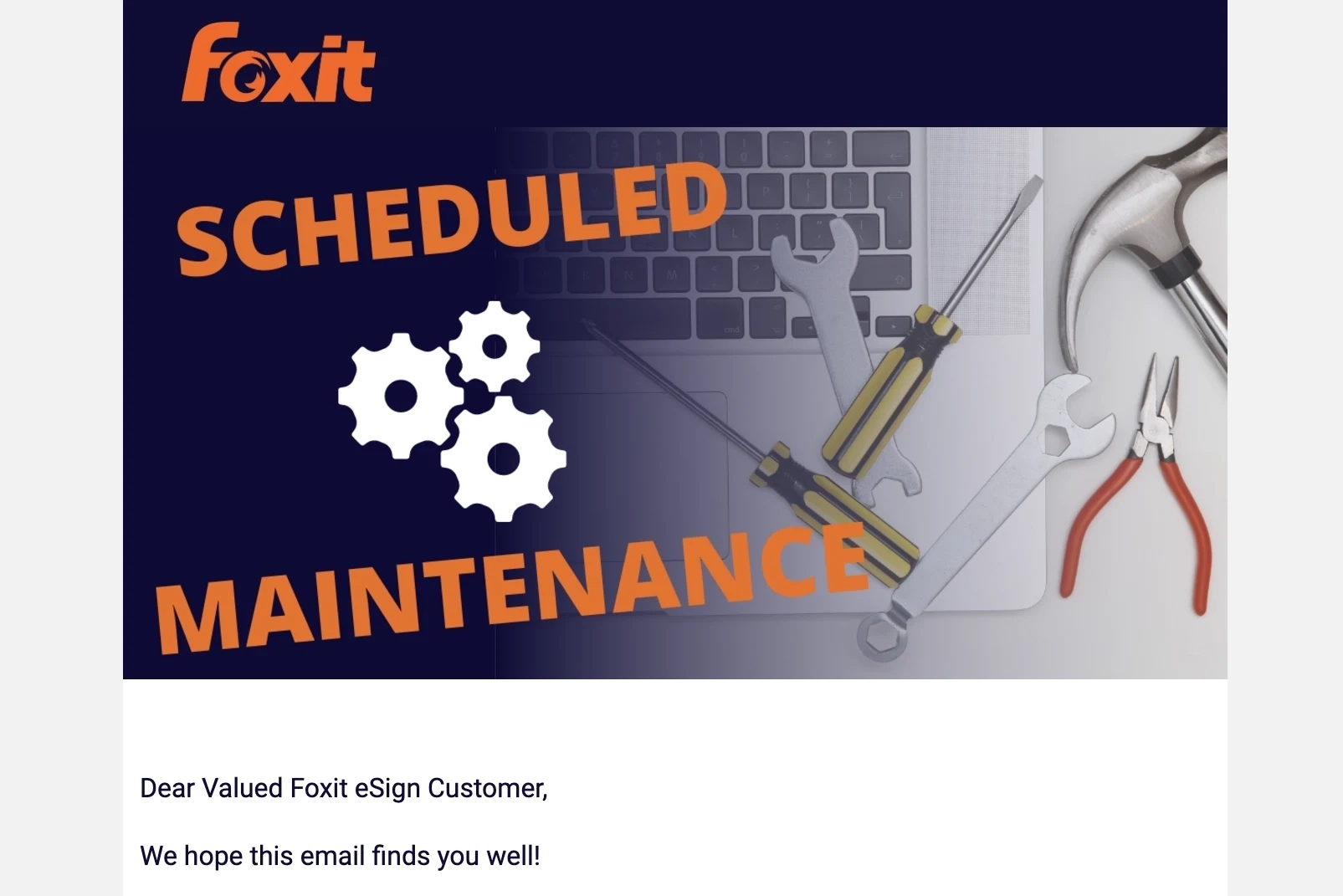
Foxit went with the longer generic professional salutation (“Valued Foxit eSign Customer”) for their scheduled maintenance email. The first sentence of the email body also follows the formal tone.
Don’t wait for the muse. Apply this step-by-step method to write high-performing email campaigns in hours, not weeks.
Dear [casual generic term]
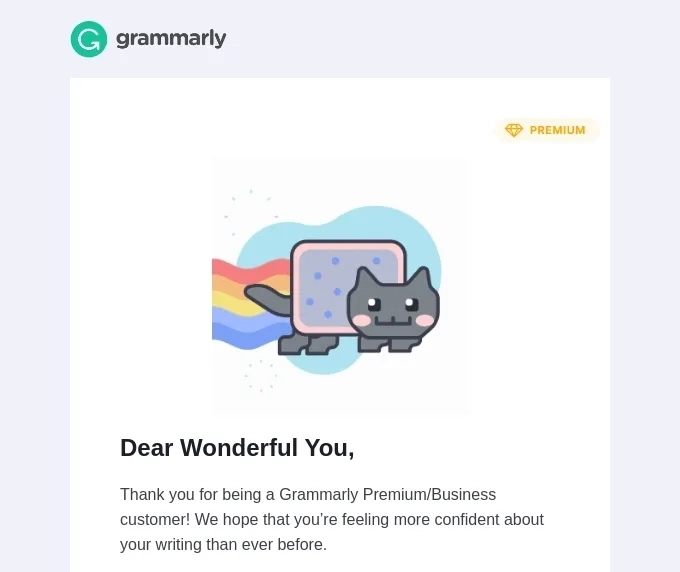
Grammarly addresses the user as “Wonderful You” to sort of butter them up in the hopes that they’ll be renewing their paid subscription.
Dear [tool community member term]

Opal refers to their individual users as “Gem”. They went with the professional “Dear” greeting in asking the user for feedback after cancellation.
Dear [tool] community or [collective term for users]
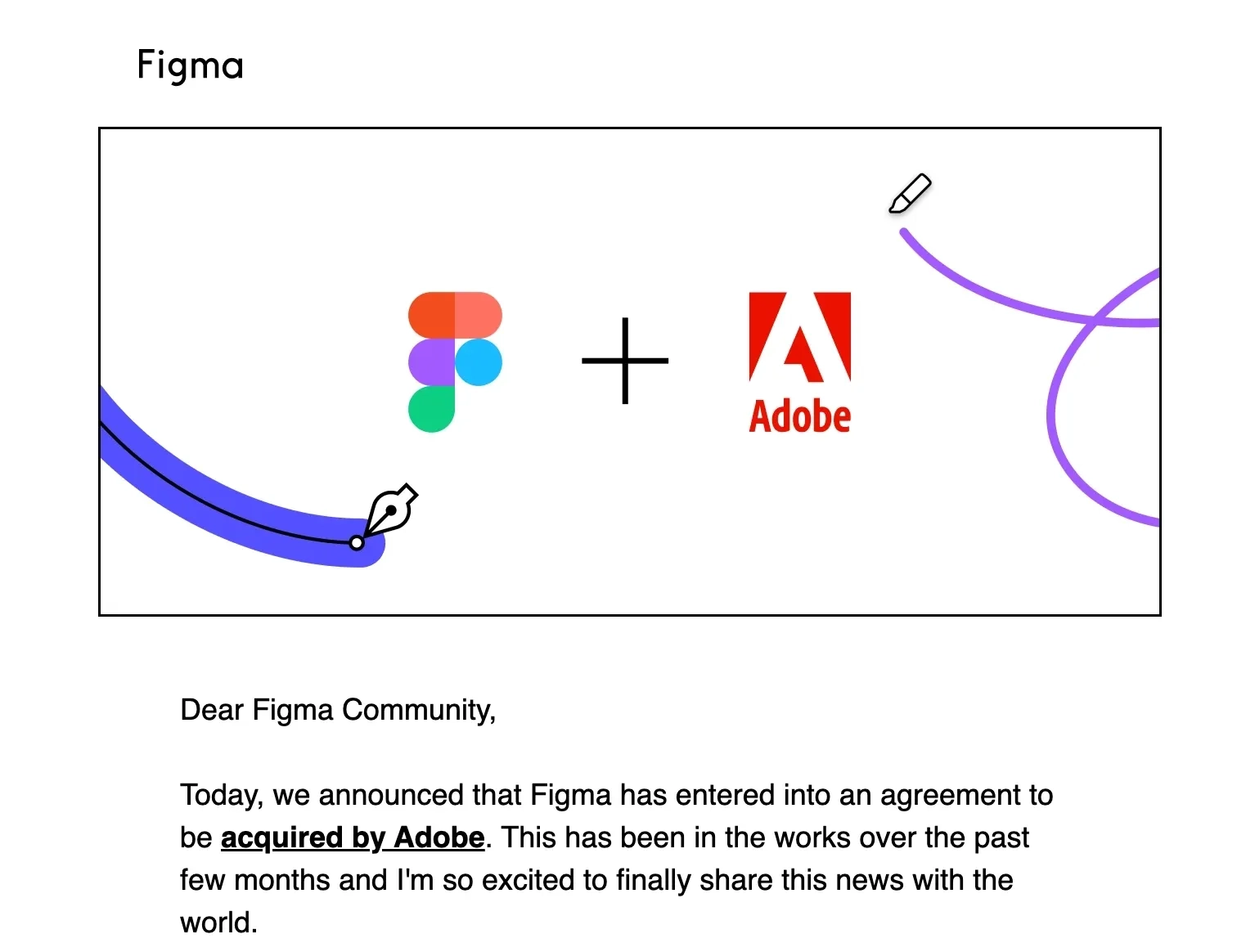
Figma addresses their users collectively as the “Figma community” in this acquisition announcement email.
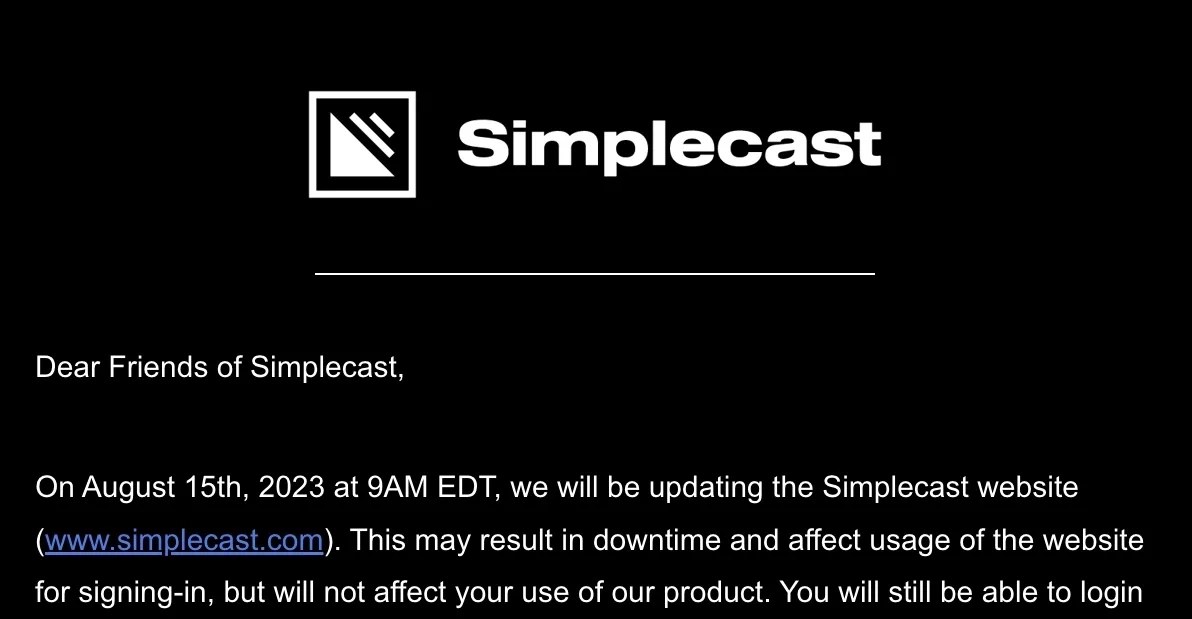
Meanwhile, Simplecast refers to their community as “Friends of Simplecast” in this scheduled maintenance email.
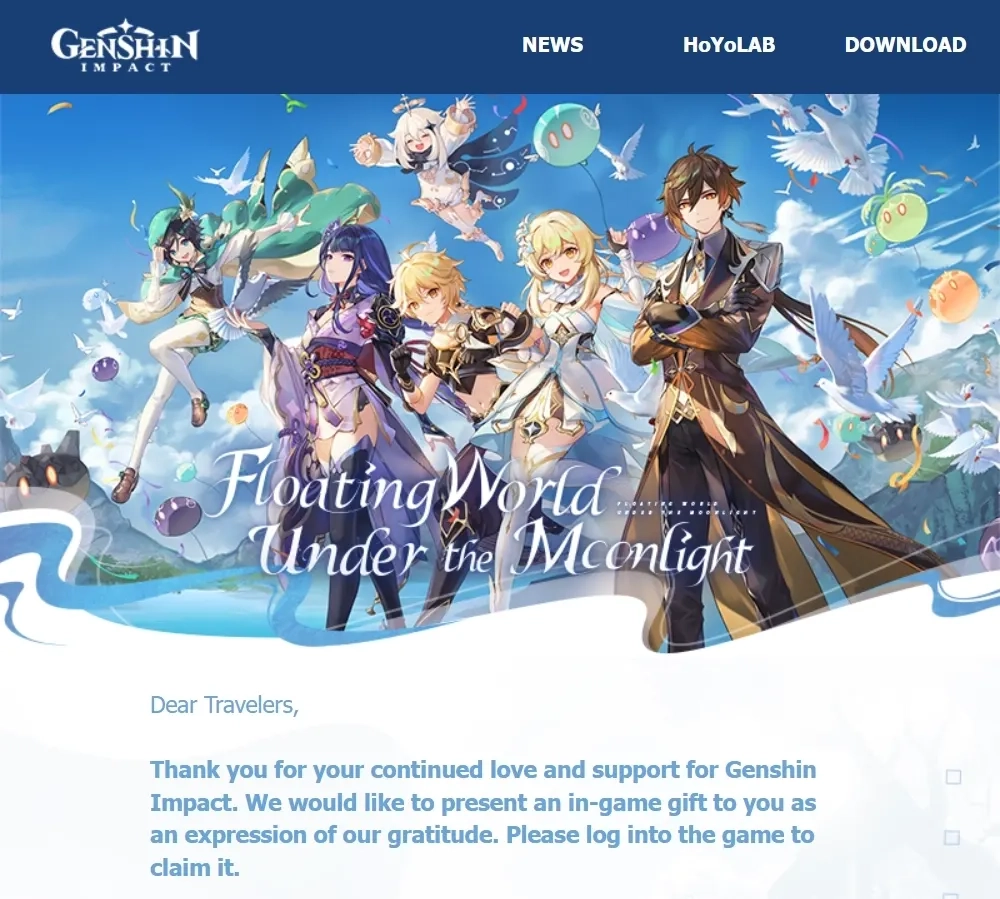
Thanks to Philippe Wong for contributing this example.
Genshin Impact refers to their gamers as “Travelers” in this milestone email.
[First name]
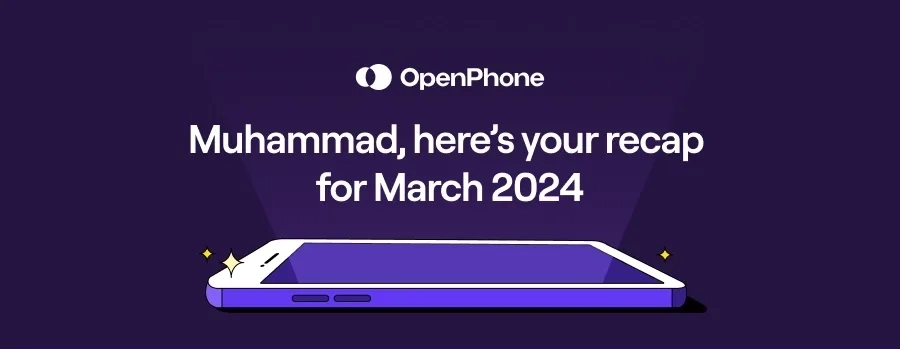
Thanks to Brian Sun of Ottomate for sharing this example.
OpenPhone gets straight to the point by dropping the greeting in this monthly report email.
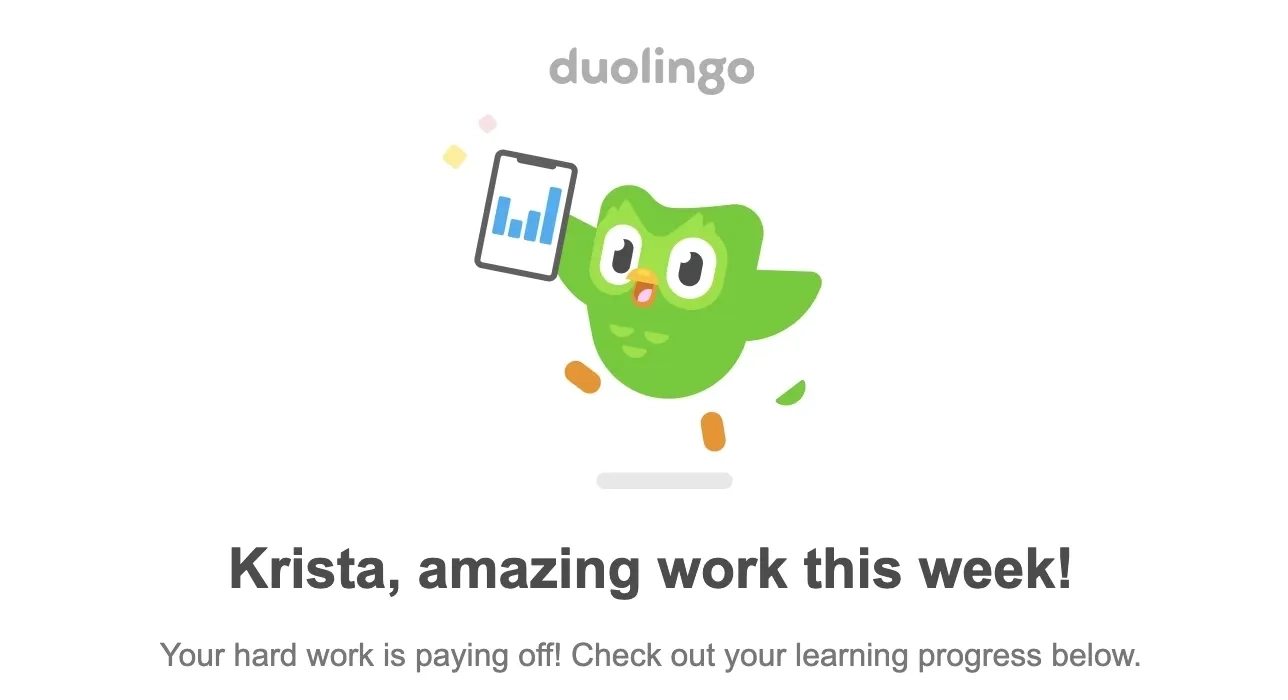
In their weekly report email, Duolingo drops the greeting because the [first name] is immediately followed by a celebratory phrase.
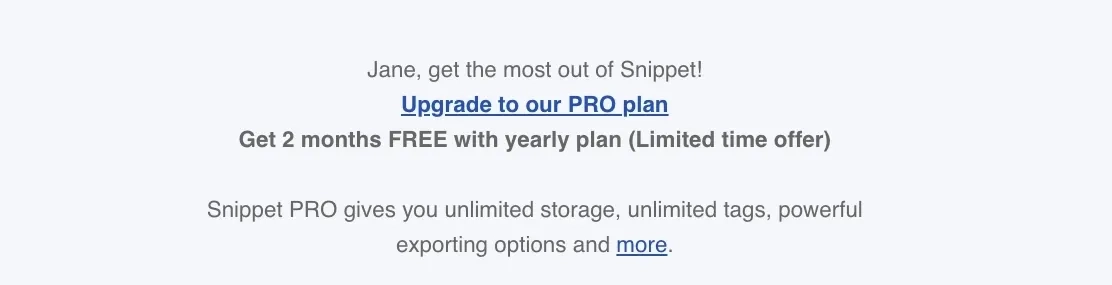
Snippet drops the pleasantries to immediately tell the user how they can get the most out of the tool by upgrading to their Pro plan.
[Full name]
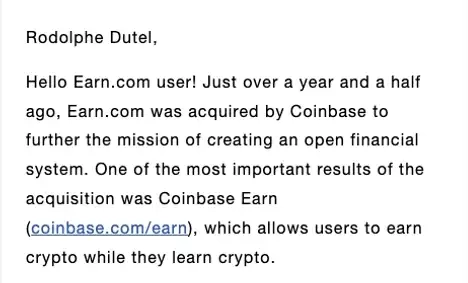
This email from Earn.com has two greetings: “[full name]” and “Hello [tool] user”, which makes the email intro redundant in this product sunset email.
To avoid this mistake, make sure that the email greeting and salutation works with the rest of the email body.

Source: Really Good Emails
In VSCO’s trial expiration email, the [full name] is immediately followed by “Welcome to VSCO X” so it makes sense to have no pleasantries before the [full name].
[Professional generic term]
Thanks to Marty Aghajanyan of jBoard for contributing this example.
For a platform used in business and corporate settings, Quickbooks addresses the user in a professional manner referring to them as “Valued customer” in this pricing update email.
[Collective term for users]
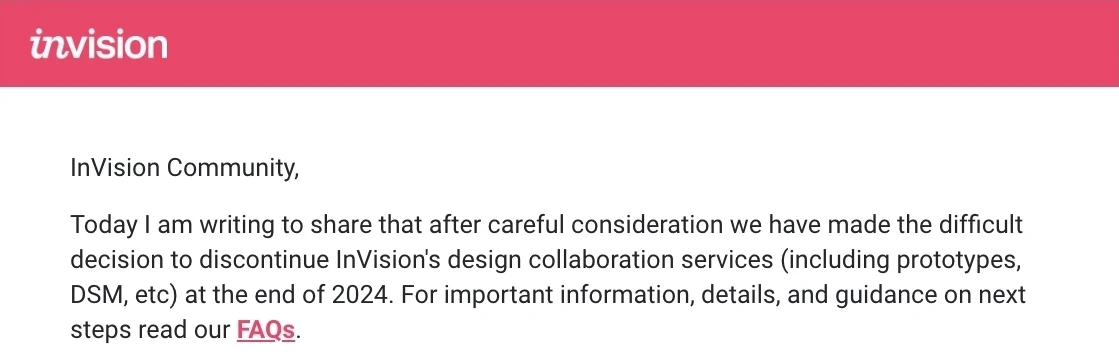
InVision skips the pleasantries when they announced that the platform is being sunset.
But one could argue that adding a simple “Dear” in the email would have added the necessary warmth and empathy to the news.
[Celebratory word] + [first name]
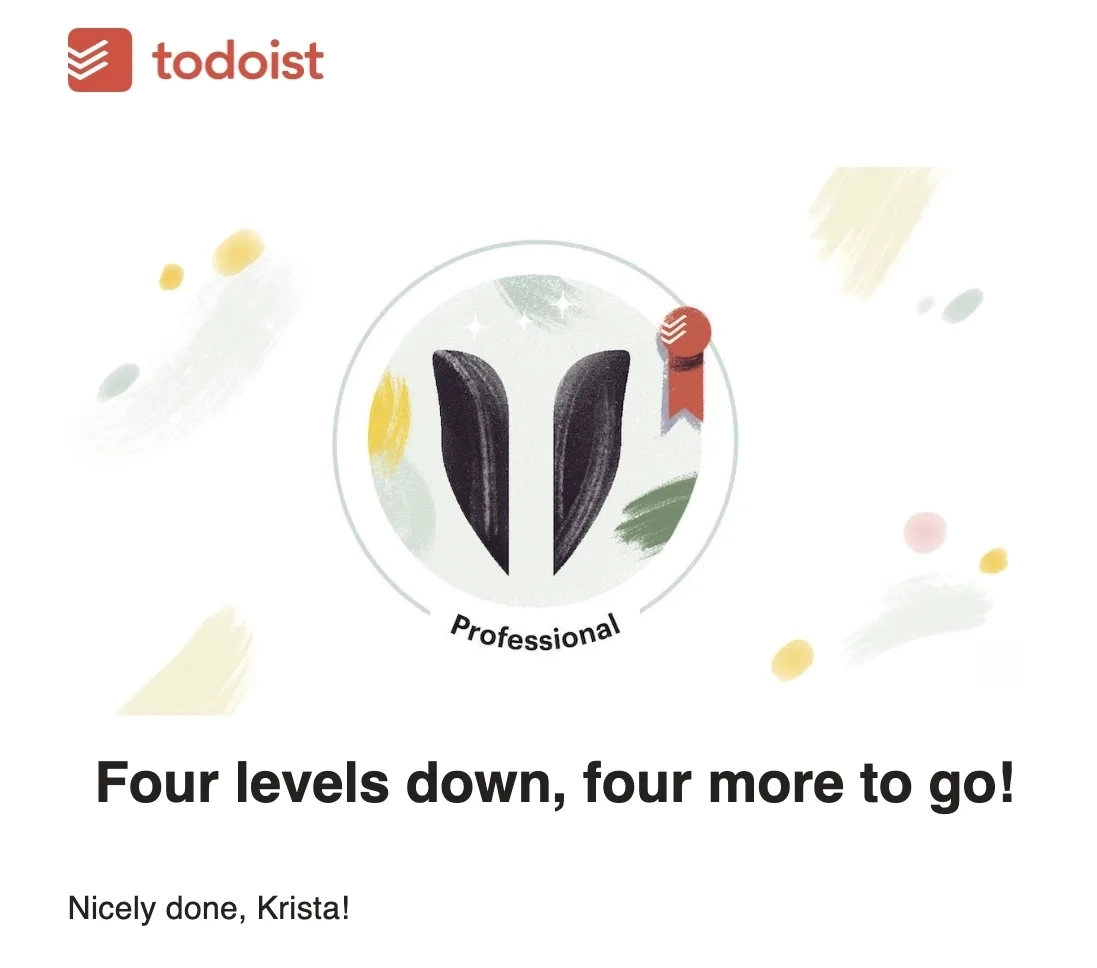
Todoist opens with a “Nicely done, [first name]” to celebrate the user’s latest achievement in this milestone email.
[Celebratory word] + [full name]
Source: Really Good Emails
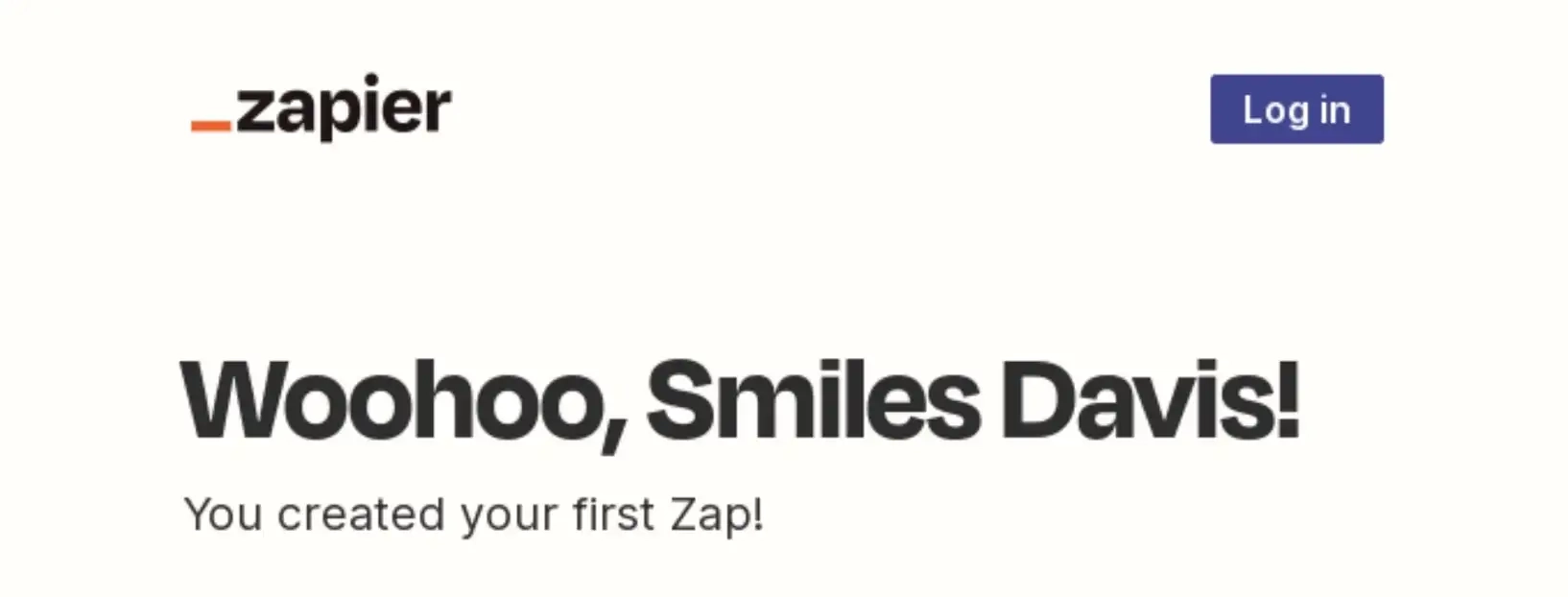
Zapier celebrates the user’s first zap with a “Woohoo, [full name]!”
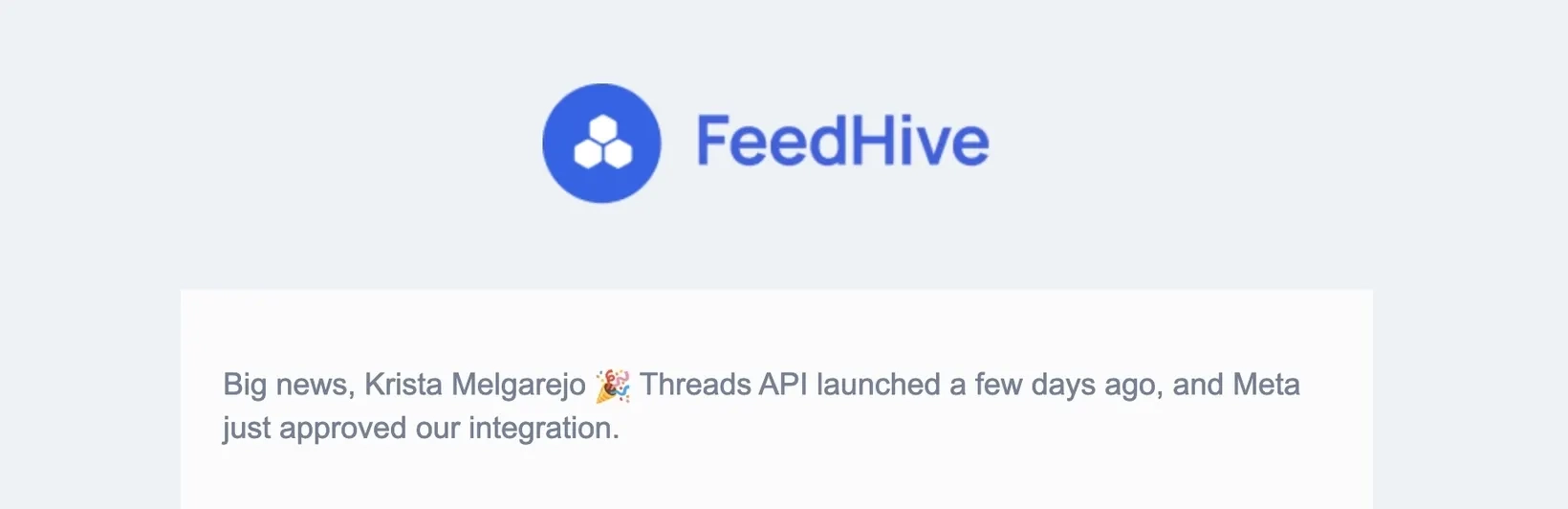
FeedHive expressed their excitement in this new integration announcement email with “Big news, [first name] 🎉”.
Happy anniversary (or a variation of it), [first name]
Duolingo greets the user with their own fun twist of “Happy anniversary” to celebrate the milestone.
Welcome
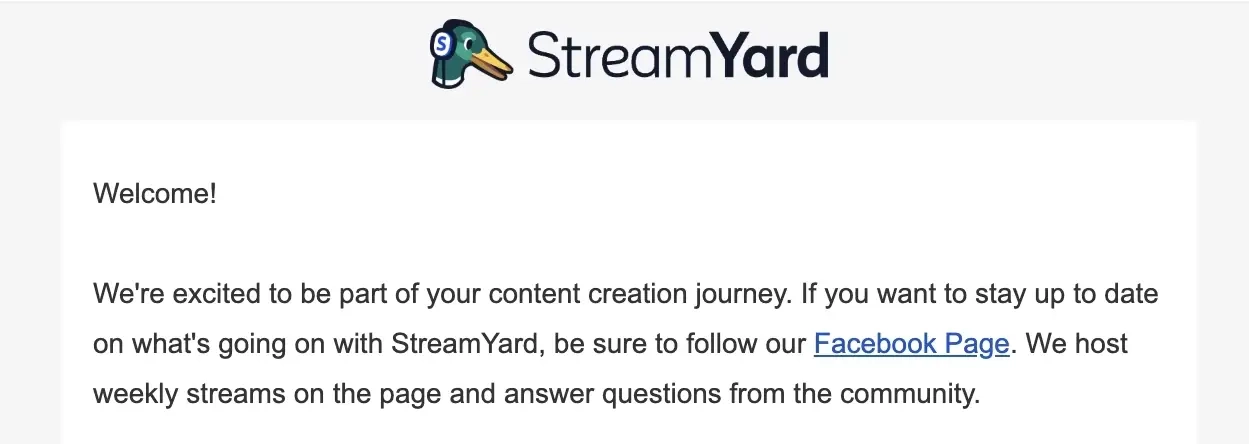
StreamYard went with a straightforward “Welcome” greeting on their welcome email that also doubles as a webinar invitation.
Seasonal greetings
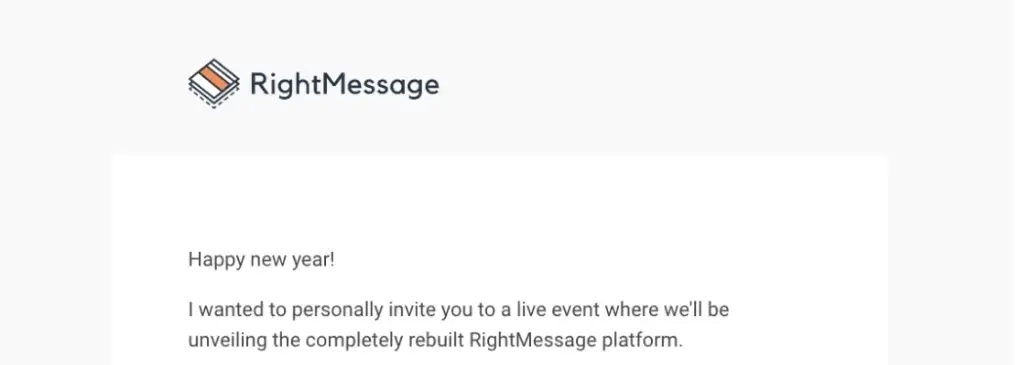
RightMessage sent this webinar invitation a few days after the start of the year so it made sense to open with “Happy new year!”
Uncommon email salutations and greetings in SaaS email marketing
Hiya
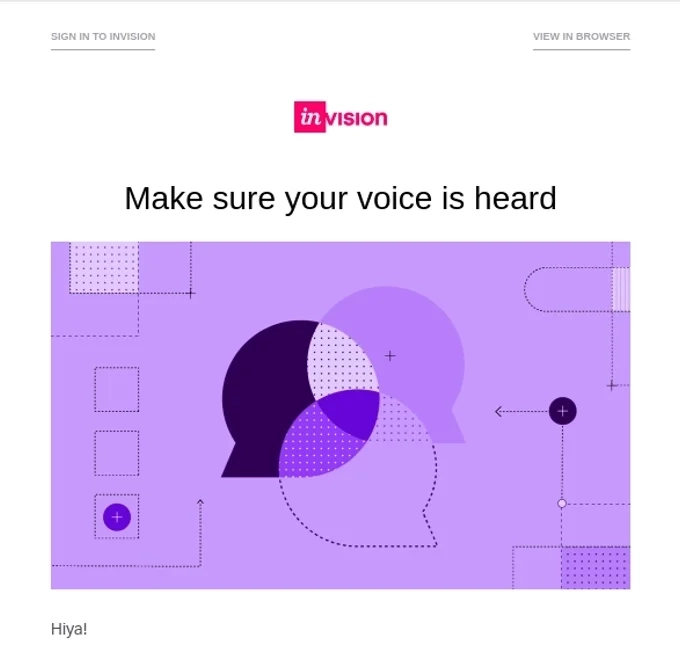
InVision went with the friendly “Hiya!” greeting in this survey email.
Ahoy
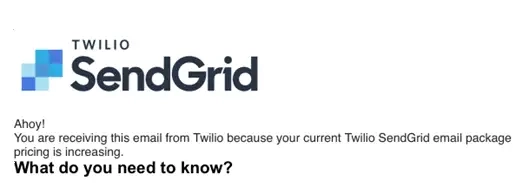
SendGrid went with “Ahoy” for their pricing update email.
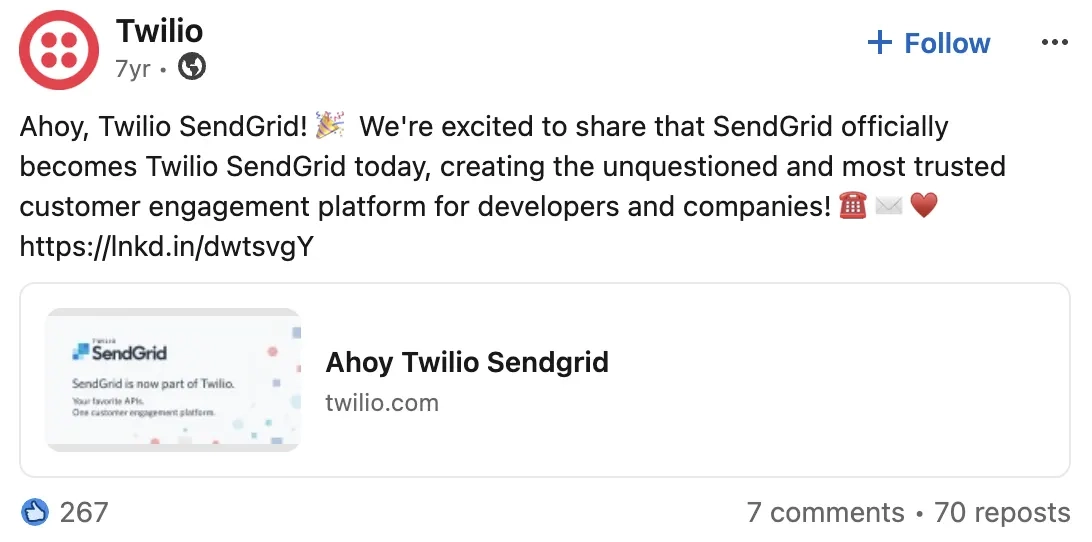
On the surface, it may seem unexpected for a big brand but they’ve used the piratey greeting as a subdomain for their educational resources (ahoy.sendgrid.com) and in their acquisition announcement posts:
Email greetings set the tone
Just like your email subject lines, your greeting lines also set the tone of your emails.
Look at your brand voice, the available subscriber information, and the email type and topic to decide on the most appropriate email greeting and salutation.
But don’t overthink it. It’s just an email.
Don’t miss out on new articles. Subscribe to our newsletter and get your monthly dose of SaaS email marketing insights.